• For many young Americans, keeping up with the news no longer starts with opening a newspaper, visiting a news website, or googling for the latest headlines. Instead, news is increasingly finding them while they scroll through social media, watch videos, or browse any number of other digital platforms.m

    A recent Pew Research Center study found that young Americans are more likely than older adults to encounter news rather than to deliberately seek it out. Among adults ages 18 to 29, 52% say they mostly get up-to-date information about news events because they happen to come across it. Only 40% say they seek out information from the news. For adults 65 and older, the numbers are almost reversed, with 68% seeking out up-to-date information and 28% encountering it by chance.

    The difference becomes even more noticeable when narrowing the consumed content to opinions and humorous content. Seventy-two percent of adults ages 18 to 29 say they mostly come across opinions about the news rather than seek them out. The same percentage say they mostly come across funny posts about the news from reaction videos, rage bait, or click bait.

    This shift shows how dramatically digital platforms have changed the way young Americans consume information. Instead of deciding to search for a particular story, users can encounter breaking news while scrolling through a feed filled with entertainment, advertisements, sports and personal updates. Allowing for quick answers instead of in depth research on a specific topic.

    Pew Research Center’s reporting on Americans’ changing news habits reflects this experience. One participant described the modern news environment by saying, “Even when you’re not pursuing it, something’s being put in front of you.”

    That passive form of news consumption can be beneficial because it exposes people to stories they may not have intentionally searched for. A young person who rarely visits a news website could still learn about an election, severe weather or an important national event because a story appeared on their social media feed. 

    Passive consumption brings other challenges as the internet and passive news can simply spoon feed people opinions and people will adopt them. The lack of critical thinking skills will rise and the desensitization of young people via social media is not something to cheer about either.

    “With everyone having instant access to internet and the short attention span people have today,” said Michael Katz an Ole Miss Sports Reporter, “you have to be able to quick and concise with information while grabbing peoples attention and keeping it.”

    Research from the Reuters Institute for the Study of Journalism has identified a similar trend among younger audiences. The institute found that young people experience a high level of what researchers call “background” or “indirect” exposure to news through social media and other forms of online content. The research argues that young people do not always need to seek out news because “news comes to them.”

    However, encountering news does not necessarily mean understanding it.

    Pew found that 70% of Americans who get in-depth or up-to-date information by chance say the news is generally easy for them to understand. That compares with 81% of people who seek out those types of information.

    The concern goes beyond understanding. Social media can also determine which stories users see in the first place. Pew found that large majorities of users on platforms such as Facebook and Instagram say the platforms influence which news stories appear in their feeds.

    Richard Fletcher, director of research at the Reuters Institute, has studied how incidental exposure affects news consumption. Research he co-authored found that incidental exposure to news is particularly strong among younger people and those with less interest in news.

    For journalists, this creates a difficult challenge. News organizations are no longer competing only against other news organizations. They are competing against everything else on a person’s screen.

    A reporter can spend hours researching a complicated story, interviewing sources and checking facts, only for a reader to encounter a short headline or social media post and move on within seconds.

    That reality has changed the responsibilities of journalists. Reporters still have to produce accurate and credible information, but they also have to find ways to capture an audience’s attention. Headlines, videos, graphics and social media posts have become important tools for getting people to stop scrolling and engage with a story.

    The challenge is making sure that effort to attract attention does not come at the expense of context. A short social media post may introduce someone to a major story, but it cannot always explain the history, consequences and different perspectives behind it.

    For young Americans, this shift could have long-term consequences for the future of journalism. If people become accustomed to receiving news passively, news organizations may have to work harder to convince audiences to seek out additional information and understand the bigger picture.

    Accidental news consumption is not necessarily a bad thing. In fact, it can introduce people to stories they might otherwise miss. The concern is what happens after that first encounter.

    The future of journalism may depend on whether journalists can turn that accidental moment of exposure into genuine interest. Getting someone to see the news is only the first step. Getting them to understand it may be the bigger challenge.
  • As students return to the University of Mississippi and Oxford’s population swells, the fall semester begins, the traffic picks up, and the city’s live-music scene comes alive again. For Proud Larry’s, one of Oxford’s longtime fixtures, the start of the fall concert season brings both opportunity and challenges.

    Located at 211 South Lamar Boulevard, Proud Larry’s has been a part of Oxford’s music scene since 1993. The restaurant by day and concert venue by night describes itself as a place where people can “come for the food, stay for the music,” and currently hosts a variety of live music most nights.

    What makes this place unique is how they seamlessly transition from table service to standing room only, with dinner service ending at nine as the openers take to the stage. Tables have to be cleared, employees have to prepare for a larger crowd, and the restaurant has to transition from a place where customers come for dinner into a small concert venue packed with people.

    That challenge becomes especially important as students return to Oxford and the fall concert schedule picks up.

    The venue’s current schedule illustrates how quickly the pace can change. Proud Larry’s has shows scheduled on several nights during the first week of October, including The Great Outdoors on Oct. 1, Lauren Watkins on Oct. 2, MissReads on Oct. 5 and S.G. Goodman on Oct. 6. Several of those shows are already sold out or have tickets available on their website.

    “Proud Larry’s is one of our favorite places to play cause the setting is right, the people, the bartenders, the owners know how to get things right. You know it’ll be a good time when we get a gig there” from Daniel Dear, drummer for Yazoo the Band.

    For employees, that means preparing for two different businesses operating under the same roof.

    Micheal Scruggs, bar manager, is there nearly every night and has seen it all saying “When I have a sold out show, you know, you have to, I have to think, OK, what time do I need to close the kitchen? What time do I need to start moving everything? What time do I need to get the security set up to start taking tickets and whatnot. But I mean it, it really just all kind of blurs together.”

    The venue’s size makes preparation even more important. Visit Oxford describes Proud Larry’s as an intimate venue with standing room for about 250 people. There is no large concert floor separating the audience from the performers, meaning employees are working in a relatively small space while serving a large crowd.

    “You know, if we have a dinner show, we’re not going to do anything. You’re not going to have security. I’m not going to move any tables…I have to think, OK, what time do I need to close the kitchen? What time do I need to start moving everything? What time do I need to get the security set up to start taking tickets and whatnot. But I mean it, it really just all kind of blurs together?” said Scruggs

    The return of Ole Miss students adds another layer to the already busy fall season.

    The University of Mississippi reported a record enrollment of 28,405 students across its seven campuses in fall 2025, with enrollment at the Oxford and regional campuses growing by 5.2%.

    More students means better business and increased foot traffic, but it can also mean more people competing for limited space at popular shows.

    For a venue with only about 250 people standing inside, a sold-out concert can create a very different work environment from a typical restaurant shift.

    Will Turner had this to say in line “A lot of people complain about getting somewhere early, you won’t hear a single person complain here. You know, every musician is special and we wanna listen to all of them.”

    That difference is part of what makes Proud Larry’s unusual. Visit Oxford describes the business as a restaurant by day that becomes a live music venue at night.

    That balancing act is part of the larger challenge facing restaurants across Mississippi. The National Restaurant Association estimates that Mississippi’s eating and drinking places employed about 103,900 people in 2025 across roughly 6,000 establishments. The association also projected that the state’s restaurant industry would generate nearly $12 billion in direct economic output in 2025.

    At Proud Larry’s, however, the challenge is not simply serving more customers or generating profits. It is changing the entire operation as the night progresses and creating something unique for students and residents alike.

    A customer can walk through the doors expecting a casual meal in the afternoon and return later to find the same restaurant transformed into a crowded concert floor.

    For employees, that transformation requires planning, communication and the ability to keep up with two different sides of the business at once.

    “This place has been here for generations and the goal has always been to bring people together with music and bring new people new experiences you know. We love being able to give platforms to smaller groups so they can start their own journey as well.” Scott Caradine, owner of Proud Larry’s.

    As students settle back into Oxford and the fall concert calendar gets busier, Proud Larry’s will continue attempting to do what it has done for more than three decades: serving good food while preparing the room for even better music.

  • { 0:00 }

    All right, what’s your name and can you spell it?

    Micheal Scruggs:  { 0:02 }

    It for me, my name is Michael. M-i-c-h-a-e-l.

    Houston Allen:  { 0:06 }

    Last name is?

    Micheal Scruggs:  { 0:07 }

    Scruggs. S-c-r-u-g-g-s.

    Houston Allen:  { 0:10 }

    And what are you like? What are you here? Are you the manager? 

    Micheal Scruggs:  { 0:14 }

     I am. The bar manager.

    Houston Allen:  { 0:30 }

    I know, I know one of my favorite things when I come in here, especially on like a Friday nights like the Kudzo Kings when I was here, just seeing the people just just talk around like.

    Micheal Scruggs:  { 0:39 }

    You were here this past Friday?

    Houston Allen:  { 0:42 }

    I was, it was a fun group to be around.

    Micheal Scruggs:  { 0:44 }

    That was that fun night.

    Houston Allen:  { 0:46 }

    Was an older group, but like they were, they knew where to go for a good time.  And this place, this place has stood the test of time too.

    Micheal Scruggs:  { 0:53 }

    Open for 33 years? I think so.

    Houston Allen:  { 0:56 }

    Why do you think it’s lasted so long?

    { 0:58 }

    And it’s just, it hasn’t changed one bit either.

    Micheal Scruggs:  { 1:01 }

    I think the music is what’s kept us around for so long.  We’ve just, we’ve never not had music. And I think we were one of the first places in Oxford to actually have live music. And you could also eat during the day. So it’s, I think, I think it’s just the music that’s kept us.

    Houston Allen:  { 1:16 }

    Especially with all the, the type of music we play and with all the especially all the famous artists that I’ve come through and played here over the years and we’re kind of chat. I mean, we all know summer. When is when Oxford slows down a bit. How does September and these next few months really differentiate from over the summer with concerts being during the night and how does the staff have to really adjust?

    Micheal Scruggs:  { 1:42 }

    I mean, for the whole restaurant in general, it’s just prepping a lot more. That means buying a lot more alcohol, buying a lot more food, kind of mentally prepping for dealing with 10 times more people than you would during the summer.

    { 1:58 }

    I mean, just you don’t really have a choice. You have to be, you have to be ready. So.

    Houston Allen:  { 2:05 }

    And what do you think? Like how do how do y’all go about choosing the bands? I know you’ll have a person that specifically goes through everything, but is there a certain criteria a band has the need?

    Micheal Scruggs:  { 2:15 }

    Not really, no. All of our bookings are done through Scott, our owner, and his daughter Haley.  But we are really open to almost any type of music. A few weeks ago, we had this show called Oxford Golden Hours, and it was a few violins, a bass, a cello like, And then sometimes we’ll have reggae music, sometimes we’ll have our rappers and, and you know, rock, country, I mean, we literally do it all.

    Houston Allen:  { 2:43 }

    And sort of what’s the the biggest adjustments and like with the expenses that comes with starting back up with the concerts and with school starting the ball back around, like there’s no way I can get a specific number.

    Micheal Scruggs:  { 2:59 }

    Like a specific number for.

    Houston Allen:  { 3:02 }

    Like expenses going up, like how much more alcohol, youth, or if prices go up, or if there’s a certain amount of money you make if you make far more money.

    Micheal Scruggs:  { 3:10 }

    You’re asking for the restaurant or  for me.

    Houston Allen:  { 3:12 }

    both.

    Micheal Scruggs:  { 3:16 }

    I mean, I couldn’t give you a specific number because it changes. It changes every week.   But I mean, like this time of year, that’s when that’s when the servers and the bartenders make more money. That’s when the restaurant makes more money. I know last Friday we had a record-breaking day for us that, you know, that happens very rarely, but that was the weekend to do it.   I can’t. But yeah, I can’t give you a specific number. That’s just really hard.

    Houston Allen:  { 3:43 }

    And does hosting the concerts bring in that significant of business and create just that much more, or does it create far more expense?

    Micheal Scruggs:  { 3:54 }

    That’s that’s part of there is some risk in in live music.

    { 4:00 }

    Sometimes we make a lot of money from live music. Sometimes we don’t at all. That’s just that’s just kind of how the how that world works.  But I mean, there is money. There is money in it, yeah.

    Houston Allen:  { 4:14 }

    You have to spend money to make.

    Micheal Scruggs:  { 4:15 }

    Money. Yeah. You got to spend money to make money, Yeah.

    Houston Allen:  { 4:18 }

    And what kind of what makes the fall such an important part of the music scene here in Oxford, especially for proud Larrys, with students coming back and discovering their things?

    Micheal Scruggs:  { 4:29 }

    I mean, I think it’s mostly just because there are a lot more people here and there’s, so we try to set it up if there’s a lot more opportunities for all of these people to go see something and see something different maybe or something they probably would not have seen before or heard before. I guess you know, like in the summer we would have maybe one or two shows a week. Now, and especially in October, I think there’s one week we have no, no, it’s like it’s going to be like a week and a half of straight music every single night.

    { 5:00 }

    But yeah, I know it’s just because it’s a busy season and because there’s so many people coming in and out of town all the time. It’s we’re trying to trying to give people that that experience, give them a chance to hear, hear something.

    Houston Allen:  { 5:13 }

    And how do other music venues like the like the Pavilion now hosting a lot more stuff and the lyric effect like the music scene here, Does it take away people if you bring in more people?

    Micheal Scruggs:  { 5:24 }

    I don’t think it has anything. I, I, I don’t think it affects us at all.  I mean, the pavilion pulls very large artists now and that money I believe is, is the, the campus pays them. I, I don’t really know how it works, but I mean, we get smaller artists, we sometimes get bigger artists, but it really doesn’t affect us at all because people know that we’re not going anywhere and whoever lol. We should go back to Nashville or do whatever and we’re still, we’re still going to be here. And, you know, everybody knows that.

    Houston Allen:  { 6:00 }

    And what kind of challenges come with hosting multiple bands per week like you said, you’re you’re going to later, Is it the preparation? Is it that way you need to execute or just?

    Micheal Scruggs:  { 6:10 }

    The only prepared challenges I could think of, and it depends. Sometimes it depends. It depends on which band is playing or whoever is playing, I guess. But like you know, making sure you’re stocked up enough with alcohol. You don’t want to run out of alcohol, beer and in the middle of the week. 

    Houston Allen:  { 6:43 }

    And what like how do y’all handle if someone cancels on y’all? Like I know the the what is it’s like upwards the board of directors.

    Micheal Scruggs:  { 6:53 }

    We had.

    Houston Allen:  { 6:54 }

    We had them play at SAF 2 years ago and they were killer. Like how do y’all deal with that?

    { 6:59 }

    Do y’all just have to book another band or is that not?

    Micheal Scruggs:  { 7:01 }

    Just it doesn’t happen very often, but it’s, you know, we don’t really, we don’t lose money, but we’re not making money when that band cancels. So it’s, you know, we’re still up and doing the day for the restaurant, but at night.

    Houston Allen:  { 7:14 }

    You know, so do they just come and play for free then or do?

    Micheal Scruggs:  { 7:18 }

    They every single band is paid OK, every single, every single person that comes to and plays here is paid at the end of the night.  But you know it, it sucks that you know you can’t get the business, but you know, it’s just, it’s part of it.

    Houston Allen:  { 7:33 }

    And how do you all do with sold out crowds? Like is that just whenever you sell something? I don’t like it? Like I know it’s what it’s either this Thursday or the next Thursday I’ll have a sold out band.

    Micheal Scruggs:  { 7:43 }

    Next Tuesday and next Friday we have a sold out show. Lauren Watkins next Friday. She’s she’s she’s an almost graduate and then Wade Forester on Tuesday. I believe it’s just country music.

    { 7:54 }

    But I just, I, I always make sure that I have enough security because sometimes you know, you, you were here Friday night for Tusher Kings. This place is full, packed out, packed out. And that’s not even including people upstairs and outside.

    Houston Allen:  { 8:07 }

    I was looking up to get like a spot at the bar where I could just me and my girlfriend could just stand like right here with our backs on it. And I was like.

    Micheal Scruggs:  { 8:14 }

    Thank God. And it’s part of it is we have to kind of gauge when we want to close the restaurant side and start getting ready for just being a music venue. And, you know, that involves us taking all these tables and chairs and putting them in our basement and having enough security to corral people, having enough bartenders to serve people and again, having enough alcohol. So.  But yeah, I mean, that’s, that’s doesn’t sound like a lot, but it isn’t it, it, it could be a lot, yeah.

    Houston Allen:  { 8:46 }

    How do you differentiate this place when it’s a restaurant or a dinner scene or just a music venue?

    { 8:55 }

    There’s a really all sort of merge into one or do y’all kind of set distinctive lines on what times it should be this and what times it needs to?

    Micheal Scruggs:  { 9:01 }

    Be that it kind of merges into one we’ve because every show is different. We, there’s no real way to differentiate. You know, if we have a dinner show, we’re not going to do anything. You’re not going to have security. I’m not going to move any tables. But when I have a sold out show, you know, you have to, I have to, I have to think, OK, what time do I need to close the kitchen? What time do I need to start moving everything? What time do I need to get the security set up to start taking tickets and whatnot. But I mean it, it really just all kind of blurs together. There’s no specific way we or one way we do things. Yeah.

    Houston Allen:  { 9:38 }

    And then how much do you think the new Calvaries has contributed to the new $16.00 over the years? Because I know it’s for me, it’s done a lot. This is where I usually spend my Thursday and Friday nights.

    Micheal Scruggs:  { 9:51 }

    I grew up in Oxford. I’ve lived here my whole life. My dad came here and then I started coming here, probably when a little too young to and its been an important piece of my life.

    { 9:56 }

    And I mean, I think it’s just, it’s been one of the founding, founding scenes for music and Oxford. I mean, back in the 90s, there was almost nothing.  And that’s when we got started. And then I remember when I was little, when the lyric opens. But I think we’ve been one of the founding places of music in Oxford, the music scene in Oxford. Yeah, thanks.

    Houston Allen:  { 10:26 }

    Thank you so much.,I think that will get us done. I’ll be in touch .

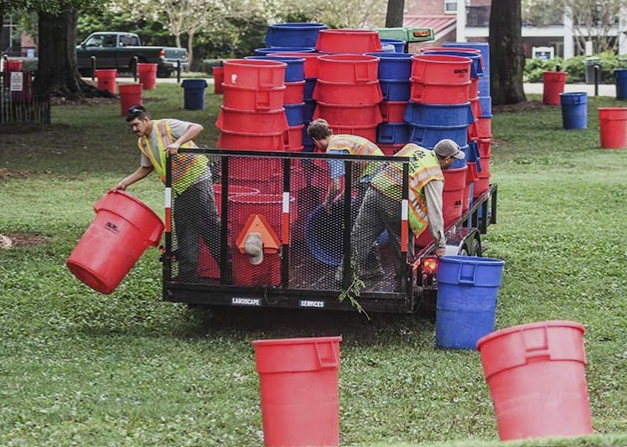
  • Landscape Services crews put out garbage cans in the Grove on Friday, September 7, 2018 in preparation for Saturday’s Ole Miss football game against Southern Illinois. (Bruce Newman, Oxford Eagle via AP)
    https://oxfordeagle.com/2018/09/07/dixie-cups-trash-can-friday-is-back-again/

    Thousands of fans fill the Grove for Ole Miss football Saturday, but before that the university’s landscape crews have already spent days preparing the campus for one of its busiest days of the year.

    The freshly maintained grass, clean walkways, strategically placed trash cans and carefully maintained trees can make the work appear effortless. Behind that appearance, however, is a large operation that begins before fans arrive and continues well after the final whistle.

    Ole Miss Landscape Services maintains more than 1,000 acres of central campus. During football weekends, that responsibility becomes even more demanding as thousands of students, alumni and visitors gather throughout the Grove and the rest of campus.

    On Friday, according to the university, Landscape Services places 2,500 35-gallon plastic waste cans throughout the Grove, the Circle, and the campus. The department also places more than 150 additional 55-gallon barrels around campus and brings in between 17 and 30 large dumpsters to handle game-day waste.

    Nathan Lazinsky, director of Landscape Services, said the department’s workload does not disappear simply because fewer people are on campus as the Rebels play the Charlotte, 49ers . 

    “With over a thousand acres of campus to work on, there is always work to do even with less people on campus,” Lazinsky said. “We still have to maintain the grounds, have to keep things clean, have to make sure the campus is ready for the students and visitors who are coming here.”

    That preparation becomes particularly important on football weekends because the Grove is more than just a green space as it is the center of Ole Miss tradition.

    Matt Foley, previously a landscape supervisor at Ole Miss, helped nominate the university’s Landscape Services department for a 2024 Professional Grounds Management Society Honor Award. The recognition highlighted the department’s work maintaining the university’s grounds and creating an attractive environment for students and visitors.

    “Our goal is to make sure the campus is ready for everyone who comes here,” Foley said. “There are a lot of people who may only see the finished product, but there is a tremendous amount of work that goes into getting the grounds ready.”

    Foley’s perspective highlights why the landscaping operation is about more than simply cutting grass or picking up trash. The crew’s work helps create the setting that students, fans and visitors associate with an Ole Miss game day.

    That work becomes especially important when the campus is filled with thousands of people. A clean and well-maintained Grove can make the difference between a space that feels prepared for a major event and one that feels overwhelmed by the crowd.

    Foley explained that what they did was crucial saying, “From the mowing and trimming to the flowers, trees, trash and cleanup, every single part of the job matters because people will notice when something is not taken care of.”

    Once the fans arrive, the work changes from preparation to maintenance. Crews monitor waste containers, collect trash and recycling and work to keep the grounds in usable condition throughout the day.

    Weather can make that job more difficult.

    Lazinsky previously described the challenges crews face when bad weather hits during cleanup.

    “We’ve done it in thunder and lightning before,” Lazinsky said. “It always rains during one game per season, and it’s just miserable. The volunteers can get a little frustrated and leave a little early, and that just makes things harder to pick up.”

    The amount of cleanup can also depend on how fans respond after the game. Crews must collect discarded food containers, bottles and other materials while also preparing the campus for normal university operations the following week.

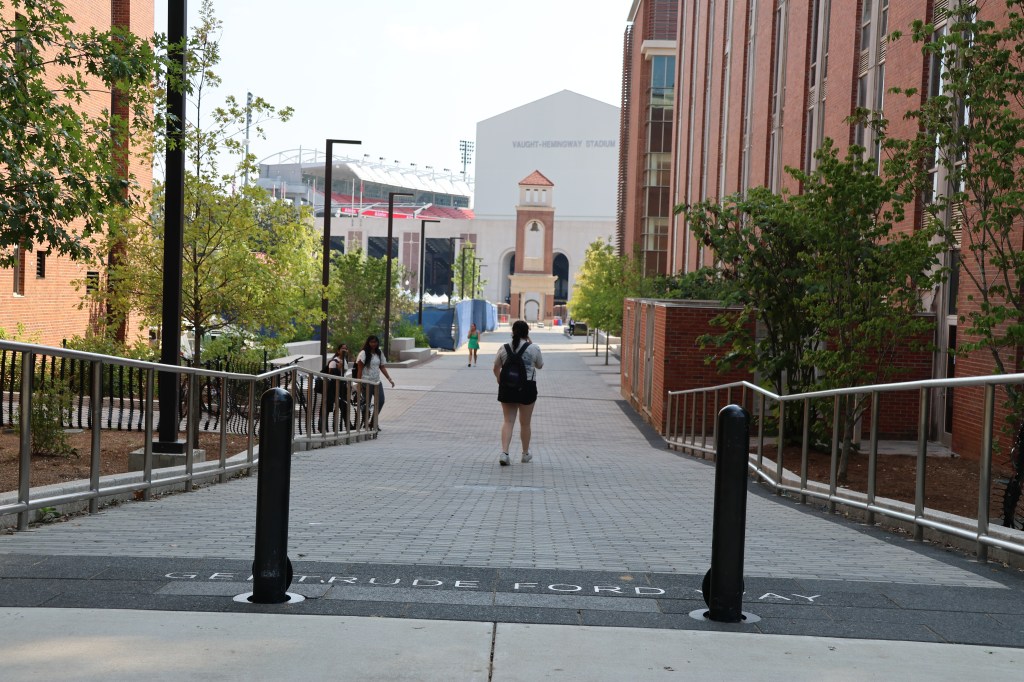
    Students walk to class on a clean campus after a busy weekend for the Grove. (Photo Credit; Houston Allen)

    The landscaping operation extends far beyond football.

    Landscape Services is responsible for the trees, flower beds, irrigation and other outdoor areas that make up the university’s campus. The department cares for thousands of trees and plants thousands of seasonal flowers and bulbs each year.

    That work became especially important following the January 2026 ice storm, which damaged trees across campus. Landscape Services helped remove storm debris and began restoring affected areas, including portions of the Grove and Circle.

    The department’s philosophy is centered on maintaining campus for both current and future students.

    “I always tell our staff, ‘You’re putting your signature on everything you do out here,’” Lazinsky said. “‘That’s your legacy.’”

    That idea is especially visible on football weekends. Fans may notice the Grove’s appearance, but they may not realize how much work goes into creating it.

    Former landscape director Jeff McManus said that appearance has a larger purpose.

    “At Ole Miss, we believe that a well-kept campus does more than just look good, it can make a sense of community and pride for the people that go here,” McManus said.

    For fans, game day begins when they arrive on campus and find their spot in the Grove. For Landscape Services, the process starts as early as 3 am.

    By the time the first tailgate begins, the grass has been prepared, trash cans have been positioned and the grounds are ready for thousands of visitors.

    And when the crowd finally leaves, the landscape crews are still working.

  • Construction around the Oxford Square has become an unavoidable part of daily life for people who work, live and spend time in downtown Oxford. Although the projects are intended to improve safety, accessibility and the overall appearance of the Square, the ongoing work has also created challenges for local businesses, employees and visitors.

    The Oxford Square has always been one of the busiest and most recognizable areas in the city. The historic downtown district is home to restaurants, retail stores, bookstores and other local businesses that contribute to Oxford’s identity and economy. Because many of these businesses rely heavily on foot traffic, changes to sidewalks, parking and pedestrian routes can have a direct effect on their daily operations.

    One of the main concerns for business owners is accessibility. Construction can make sidewalks more difficult to use, redirect pedestrians and create confusion about where customers should park or enter businesses. Even minor inconveniences can affect whether someone decides to stop at a store or restaurant.

    “Any time there is construction around the Square, we notice that people have to think more carefully about where everyone is going and where they can park,” said Catherine Freeman, an employee at I Just Have To Have It. “We understand that improvements are necessary, but the process can still be difficult.”

    The construction has also affected people who visit the Square for reasons other than shopping or dining. Students, residents and tourists regularly walk through the area, and changes to sidewalks and traffic patterns can make their usual routines more complicated.

    For some visitors, the construction is mostly an inconvenience. Others recognize that temporary disruptions are often necessary when a city is trying to improve its infrastructure.

    “It can be frustrating when your normal route is blocked or you have to walk around construction,” said Finn Cooley, an Oxford resident. “Still, I think most people understand that the city has to keep expanding.”

    One project connected to the Square involves the planned installation of pedestrian-activated lighting in the crosswalks. The lighting is intended to improve visibility and make it easier for drivers to see pedestrians, especially at night. According to the City of Oxford’s development updates, the project is designed to improve pedestrian safety in the downtown area. More information is available through the city’s development news page: City of Oxford Development News.

    The project includes lighting at four different pedestrian crossings, showing the city’s focus on improving safety at multiple points around the Square. The work may cause short-term disruptions, the goal is to create a safer and more accessible downtown area in the long term.

    That creates a difficult situation for businesses located around the Square. Owners must manage the immediate effects of construction while also considering how the completed improvements could benefit their businesses in the future.

    The Square’s businesses depend heavily on the area’s walkability. Customers often visit one store or restaurant and then continue exploring the rest of downtown. Construction changes pedestrian routes or makes the area less convenient, businesses may lose some of that spontaneous foot traffic.

    “It is a situation where you have to focus on the long-term benefits,” said Miss Whitney. “The construction makes things more difficult right now, but hopefully the finished project will make the Square better for everyone.”

    Despite the challenges, the construction also emphasizes how important the Square is to Oxford. It remains a central gathering place for the community and a major destination for visitors. Many local businesses have built their identities around being part of the historic downtown district, so maintaining and improving the area is important to the city’s future.

    For residents and business owners, the main concerns are how long the construction will continue and whether the completed apartments and construction will justify the temporary inconvenience. Clear communication from city officials could help businesses and visitors better understand what to expect as the work progresses.

    In the meantime, businesses around the Square remain open while construction crews continue working nearby. Customers can still shop, eat and visit downtown, although they may need to allow extra time and pay attention to changing entrances, sidewalks and access points.

    For Oxford, the Square is too important to overlook. The success of these projects will affect not only the appearance and safety of downtown, but also the businesses and people who give the Square its character.

  • Hello World!

    Welcome to WordPress! This is your first post. Edit or delete it to take the first step in your blogging journey.